You know there was a time, when a man could say whatever he wanted, whenever he wanted.
All he had to worry about then was who, if anyone (it was more than likely someone) would henceforth endeavour to punish him for it. It’s possible someone would challenge him to a duel. Maybe a mob would casually set fire to him. Or perhaps the local constabulary would kidnap him, torture him to death and sell his family into slavery. You know, the little things. Minor hiccups in an otherwise glorious age of freedom.
It may very well have gotten him murdered. But gosh darn it he was a man and he could say what he wanted, provided no other tougher, higher born, moneyed, land owning, generally well resourced, religiously overzealous, just plain psychotic or perhaps multitude of men or women took any issue with it, him, his racial, religious or cultural affiliation. Perhaps all of the above.
In any case. that was freedom. In a sense. In a very dull, meaningless sense. People could do or say whatever; there were just consequences to doing and saying certain things. Certain things to be determined by relatively well connected people in positions of relative power, or the cumulative will of a people, inadequately parsed through inadequate systems of legitimization. Royalty, aristocracy…politicians even. One might even go so far as to say these things were ‘Politically Correct’, albeit appealing to a far narrower polity. There was even a time when ‘political correctness’ went so bonkers people had to stop referring to various western European migrant communities in a derogatory manner. I guess they just became important. But I digress.
Spades could be labelled as spades without too much hassle. So could black people. Homosexuals and easily transportable bundles of sticks could similarly be described as “faggots” and similarly disposed of without too much protest. People living in foreign lands could be branded as godless heathens and sub-human monsters deserving of mass execution or enslavement. Take your pick. It was all good, mostly because there was a comparatively limited intermingling of people across wide geographic areas and as is usually the case, there was a fairly limited flow of information, naturally imposed on the human race, resulting in a fiercely regimented class system. In summation, what was favored by the top, came from the top. If you did have an issue or a bone to pick of any kind, as most of the population of any given land most assuredly did, there wasn’t really any way you could talk about it, let alone do anything about it, bar taking over the joint yourself; a goal out of reach for most and costly even in the best of cases. So, if what you wanted to say or do happened to line up with the “politically correct” narrative of the time, be it the appropriate role of a gender or the cultural and moral superiority of a race, go nuts! But if it was anything even remotely outside of that — perhaps interracial marriage or the mildest of blasphemies — you could expect a slightly more significant kickback than a strongly worded letter or tweet.

A popular narrative today seems to be that “political correctness” (PC) is taking over. Gone “mad” even. It began with mumbles about being asked to change a bit of language, referring to people as they would like to be referred; continued with audible groans, after politicians and the media started talking the same language; and has culminated in furious indignation as institutional changes begin to take hold, whether it be a government legislating trans-gendered access to bathrooms or a campus uninviting a controversial speaker.
It’s a brand of indignation which is a little difficult to take seriously though, if we’re honest. Serving to illustrate little more than the imminent hypocrisy of life in a bubble. Denying access to a university podium seems miniscule when set against the backdrop of barbaric immigration policies literally restricting the free movement of billions of people. But I guess we all need a safe space right?
The backlash against perceived “PC” culture has not been insignificant, but it’s a case of shooting the messenger, rather than dealing with the underlying challenge. Here, we were looking for a scapegoat and one just wandered up, informed us that scapegoat was an offensive term and asked henceforth to be referred to as Anglo-Nubian. The nerve. Christmas is ruined.
Dissatisfaction with political leaders, governments, and other institutions was already through the roof and enormous swathes of people are voting with their middle finger or withdrawing altogether from any form of meaningful engagement. This is not likely to go away any time soon, as the phenomena which produces it are inexorably bound up in the way we have always lived: Ephemerally, unstably, with a narrow politics and a narrow projection of an ever increasing diversity of people.
So if that’s the case, why does it seem so much like the “politically correct” (that nebulous, almost meaningless term) is taking over now? It seems popular these days to blame it on a liberalism gone mad. One that wants to hang itself with its own naive ideals. Taking a concern for social justice and turning it into a brand of padded fascism, where everyone is both victim and culprit, master and slave. A sort of ideological self-flagellation. It was working before, up until the point where it stopped helping me, but now everyone’s gone off the deep end right?
It’s an energizing narrative, no doubt. But it is also utterly disingenuous.
First of all, if you are seriously convinced that Political Correctness is taking over, then I can say with a fair degree of certainty that you simply need to get out more. Your world is insufferably tiny and you should feel bad. We should all know by now that just because something is a topic in the media doesn’t mean it is relevant to anywhere close to most of the world. But even if you don’t feel like peering out from behind the proverbial curtain and seeing the utterly insane amount of bullshit that billions of other people have to put up with then you could at least perhaps try taking a step back and remembering a few things.
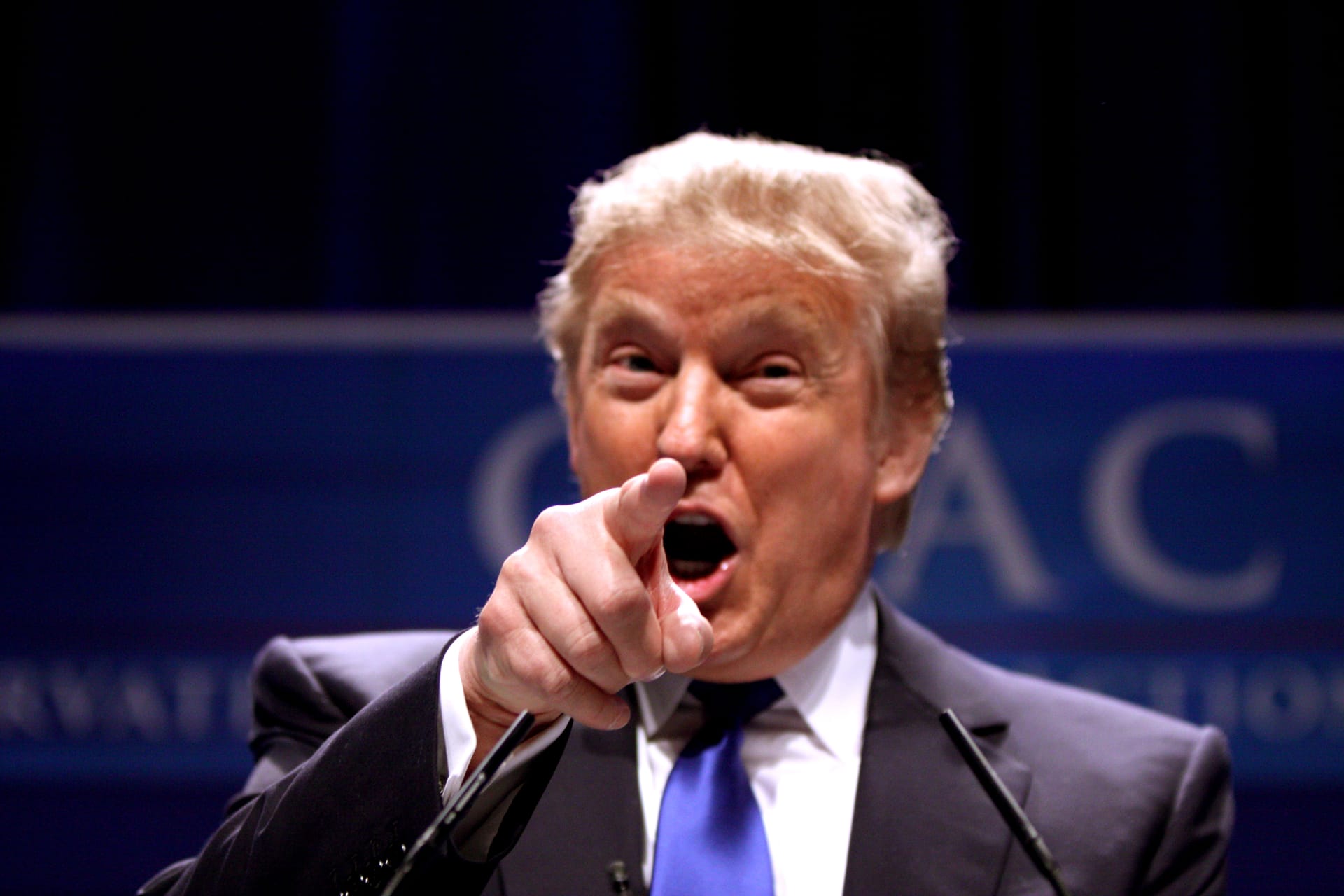
For example, South Park is still on the air and still being renewed for more seasons (to our mutual celebration), Donald Trump successfully ran for president on a platform of bigotry and masturbation and statements like calling countries shitholes and people terrorists get unprecedented coverage on a regular basis.
Is it really an age of political correctness? It seems more likely that we found ourselves with a totally unprecedented and unbound medium of communication a few decades ago that put everyone in touch with everyone else and it is just now starting to establish its own social mores. As every other medium or public space has done forever. It also seems natural that those social mores would be naturally geared towards facilitating conversation with larger more diverse groups of people, meaning a certain degree of ‘niceness’ that may not have necessary before.
A few decades ago, we were told we couldn’t swear or have sex on television, people tried to take Monty Python off the air, and governments told us what political philosophies we could identify with and which vague unknown parts of the world were our friends and enemies. The fact is there has literally never been a better time to relentlessly insult whoever you please to as wide an audience as you please; it’s a veritable golden age, with one catch, they can probably hear you.
One century ago, saying something a powerful group or government didn’t like was much more likely to get you killed. There were far more restrictions on what could or couldn’t be said and far fewer, more controlled public spaces in which to say them. These days you can express yourself like never before, broadcast all the nonsense you want to the entire world, but something rather funny happens when you do that. The rest of the world tends to respond. And when they do, people lose their minds, thinking their freedom is under attack.
Though I have some sympathy. It must be hard being both wrong and a coward at the same time.
See this is about more than free speech. It’s about the ability to actually participate and influence cultural and even institutional norms, individually or collectively, “through” the practice of free speech. Without that critical component, it’s all for show.
Now some folks might want others to only have the first half of that equation. They might fear what will happen when we truly lift the lid, concerned that their own free speech might be limited. But the real danger, is what happens if we don’t.
Global communication and an emerging global culture inevitably means that more people come into contact with more people. Now we could simply state the obvious — that this makes legitimate political and other systems that much more difficult to build and maintain. Some would rather tediously (and pathetically) follow on from that by saying that multiculturalism should therefore be tossed in the ‘too hard’ basket. Some would even go so far as to say it’s a danger, threatening the very foundation of civilization.
Claims of this nature aren’t worth the bandwidth they occupy. The logical equivalent of arguing in favour of the bystander effect. “Well xyz person/country/culture isn’t doing the same, so why should we?”. Attempting to occupy the moral high ground while simultaneously ceding it. The definition of ‘regressive’ liberalism, a term so frequently misused.
Several things are being ignored here. One is that every culture and society as it stands intimately depended on communication, migration and cultural exchange with inevitable change to get where they are today. All those parts that are presently valued and apparently challenged belonged in some earlier iteration to some other permeable population at some point.
Another is the simple fact that whatever population you consider yourself part of, whatever identity you see as being largely homogenous, filled with people just like you, most assuredly is not. Societies weren’t blessed with convenient uniformity before the grave age of political correctness and globalism started plying everyone with a little nuance. If they seemed that way, it’s probably because they are/were, like all other societies to greater or lesser degrees, fundamentally broken to begin with, suppressing the individuality and identity of innumerable people in innumerable ways.
The reality is that every society in the world suffers from the same problem to greater or lesser degrees, that is, a lack of self knowledge. Operating on the basis of a rather shifty looking shadow of ourselves, black and white understandings come quite naturally and it becomes markedly easier to see monochromatic monsters in complex arrangements of things.
And here’s the other thing, or more of a physical constraint made socially manifest really: the human brain can only handle so much. That might sound like a bit of a cop out, and it is. But it’s also an important factor. Information is literally filtered down into manageable bits as it enters the nervous system. Reduced, redacted, and filed away for amicable consumption. No one knows what we’re missing out on. But one thing is for certain, we are missing an awful lot of information about each other.
We simply must get better at this and work towards observing, accepting and understanding more. As fast as we possibly can. For our own sake, as well as everybody else’s. Saying “woah there, slow down” is the social equivalent of clinging to fossil fuels less we ‘upset’ the economy.
But sure, communication can be hard. The discovery of self and the discovery of others walk in lockstep. Everyone searches for ways to be different and the same simultaneously. Part of a group while also being a unique individual. We are spectral, wave like, identifiable only as relative to something else.
So what might be useful is a light that fills the room, emanating from every point, casting no shadows, showing us for who we really are, and revealing the whole inglorious mess so we can slowly start adjusting to life in the real world.
We might see who we’ve been stepping on this whole time, or all those people we’ve been hurting when we swung wildly into the darkness. It might be uncomfortable, but that’s the way it is. Get used to it.
People are complicated. A religious or nationalist extremist who practices and promotes an ideology which actively oppresses others, yet whose people have been historically aggrieved or whose family was killed, can be both victim and perpetrator of injustice at one and the same time, without the need for cognitive dissonance, because reality does not occupy only a single dimension.
In addition to a whole lot of other fun things we are all, more than likely, both victim and villain in some capacity as well. Wanting to at once maintain our relative status of power, whether it be over a nation or a family or a remote control, but also one’s own status as a victim. We want to preserve our victimhood. Being confronted with the victimhood of others not only labels one as a purveyor of injustice, but somehow denies us the right to claim injustices perceived against us, apparently. The chief irony here is that a consistent liberal ideology would not see that as mutually exclusive at all. It would simply say, “don’t use your rights to remove someone else’s”. What a shame consistent liberalism is so infrequently practiced.
It hurts right? Feeling hard done by. But here’s the important thing to remember: It hurts for everyone, all the time. What’s more, there are varying degrees of victimhood, depending on how far from the center of this multidimensional ripple we call society one truly lies and we have to be ready to face up to that and use it to gauge just how appropriate it might be to poke our noses in to any given conversation.
Think of it like a crowd gathered around a candle. The closer you are, the more yourself and others are illuminated. But the further back you stand — it’s not just others who are obscured — it becomes difficult just to see yourself, as you are increasingly defined by shadows.
The reason why a current of oppressive political correction is most sorely felt (to exist) by white males in the West is because of their relative proximity to the projected cultural homogeneity of yesterday. The consequences of casual racism, sexism, or homophobia are invisible when the oppressed are silent and the powerful are loud. So when we start conversing ever louder, we can’t very well be upset when others want to up the volume a little too.
The image of an age of freedom is a direct reflection of this relationship. It is far more difficult to detect the existence of ‘political correctness’, when there is greater cultural homogeneity communicated between individuals and groups outward. Predominantly in one direction. Generally from a central power structure that more closely resembles the power structures in the populace at large. A big giant conservative snowflake. A fractal of authority. Making it quite easy for one to say whatever they want, if what they want is largely the same as what they perceive everyone else to want and vice versa.
Isn’t it rather convenient then that we have such a readily available means of connecting with and understanding each other better, to our mutual benefit. A way of subverting dominance and flawed structures that doesn’t involve wholesale destruction, but instead gives us cakes that say ‘Happy Holidays’ and female Jedi.
This is other major misconception when it comes to the ‘politically correct’. If we are honest with ourselves, how much of it is really down to a desire to oppress? And how much can simply be chalked up to the interaction of larger groups of people in common systems. Do we have diversity in pop culture because “political correctness has gone mad!” or because a visible market has made itself known and something-something capitalism? Are we told to stop referring to people in general terms because “the PC police are trying to change the facts!” or because nuanced descriptions are actually more accurate and ‘technically correct’. The best kind. Are we complaining about jokes that reinforce those inaccuracies because we’re trying to kill off comedy? Or because searing truth is funnier than made up bullshit and being both wrong and a dickhead just isn’t quite as funny anymore. Nor does it really provide any useful insight or help anyone at all. How much ‘PC’ is actually just knowingly speaking or listening to a bigger audience?
Further question. Has any of that actually stopped people from producing culture, forming organizations, promoting ideologies fudging the truth, outright lying or telling bad jokes and generally being unequivocally un-PC? Of course not. It’s closed off certain avenues, shifted or even expanded their now slightly more responsive audience.
This is not about rewriting reality to make everyone more comfortable. If anything it has entirely the opposite effect. If you think the greatest threat to scientific truth is the ‘PC police’ then you obviously haven’t been paying attention. If you think that a group of people claiming ‘offense’ at an idea, however truthful, means that idea is being shut down, then again, you need to get out more. It’s a big wide world out there and just because you read 15 or even 1500 comments on social media, doesn’t mean anything is being shut down entirely. It’s just picked the wrong spot. It might move. It might mutate. On average, the audience for everything is growing.
Why? Because people are free to talk. Free to respond. And free to bugger off somewhere else.
There’s a weird sort of analogy here (weird in the sense that it very much overlaps). A number of Americans might be upset at the idea of other countries competing with them on the world stage, economically, militarily, diplomatically, culturally. They may see it as a form of failure. Diminishing their own stature. But it can only be read as a failure if the objective was to maintain perpetual superiority, which, morality aside, is a functionally impossible task. So it’s a failure if you live in an imaginary universe where everyone and everything is static and immortal, ignoring also all the things that brought you to where you are. But back in the real world, where entropy exists, it is the only possible definition of success. So you’re the most powerful country in the world. You haven’t been conquered or crushed. No. Everyone else just started doing a little better. Maybe you had something to do with that. Maybe not. Maybe you did your best to avoid it. That sounds more likely. In any case it’s all a little grey. But hey, the world is moving past your dominance and didn’t wipe you out in the process. Let’s call it a win shall we?
Now we could get all self righteous here and claim that liberalism and freedom of speech need a shining beacon on the hill, a line of defence against the impending forces of darkness. But that would again be cowardly, and you know what, more than a little incorrect. Not politically incorrect. The other kind. Factually incorrect. Hard to tell the difference sometimes
Freedom is and always has been its own best defense. It’s own reward. It’s own army if necessary; conjuring up battalions of the downtrodden from the trenches in fleeting endeavors to move the lines forward a few meaningful meters. No one owns freedom.
So much of this politically incorrect stuff is just flagrant mischaracterisation. And why oh why would I want to argue in favour of imprecision and inaccuracy? There is just no good sense in it. Nor is there any sense in fighting the darkness by turning the lights off. Nietzsche warned against fighting monsters. “Take care lest ye become one”. Liberal ideals aren’t hanging themselves. They’re cutting the rope. All of the ropes.
Is it then such a bad thing when more people start wanting or having a say on how we collectively consider things? Telling us they aren’t who we have always just kind of assumed they were? Isn’t that kind of the objective?
So instead of a world where encouraging precision and context when it comes to complex arrangements of people, ideas and experiences, constitutes madness of any kind, I would like to paint a different picture.
What we think of today as ‘PC’ culture, is not the widespread sinister application of political authoritarianism that so many make it out to be, but rather the democratization of cultural authority, or at least toward that end of the spectrum.
The world has not gone PC mad. We now simply have a greater plurality of people, doing the same thing that a far smaller group of people was doing before. That is, creating social structure, rules, codes, courtesies, mores, whatever you would like to call them, which in turn are propagated across a far larger and more diverse population. It is the democratization of supply and demand, socially speaking. And it is one of the many birth pangs of a more healthy society, one which is more self actualized, with individuals and groups more aware of those around them.
The world is slowly waking up to itself.
Now you don’t know me. So as of right now, there is a limited picture of me in your head. Would greater communication slowly bring the me inside my own head and the me inside your head into greater alignment? Even in that one-on-one one scenario it’s pretty tough to chart a meaningful course. So what happens when we extrapolate to entire cities, nations, or global societies, ever increasing in size and complexity?
We don’t really have the foggiest idea who people are and what they believe. What’s more, the level of cognitive functionality necessary to have even vaguely accurate pictures of massive swathes of other individuals is impossible to comprehend. So we do what we must. We aggregate, compartmentalize, and generalize. We do it with everything, from personal relationships, to our most fundamental narratives of history. It’s normal, but we have to at least acknowledge the process exists. We have to at least try to be self aware.
Now that can be a real challenge to anyone who can be bothered with the attempt, especially when the world is bigger and wider than it has ever been. It means that sometimes, someone might want to just have a moment. Enjoy a safe — dare I say it — space. Maybe it is cowardice. Maybe it’s a defence mechanism. Or maybe it’s a healthy way to regain a little composure and exchange some much needed perspective. Whatever it is, it’s a hell of a lot better than hurling insults over the internet. Not that bad ideas don’t need correcting. They do. It’s just that perhaps sometimes it can be worthwhile letting people finish a thought.
Recent events have forced a reckoning of sorts. Liberalization is a tide that comes in and goes out, wearing away at the coastline without ever really making it past the beach. The Internet was a tidal wave. The flood that broke the dam. Linking together people all over the world, outside the jurisdiction of traditional centers of control (though certainly not entirely) and bringing forth an ever growing series of realizations or confrontations, or at least confabulations for an ever growing number of people. The reaction to the overwhelming heterogeneity of reality? Panic. Terror. Tribalism. Build a wall.
Of course, it’s not like differences are all benign. People do have widely ranging, contrasting and even conflicting views on things. And some of those differences are legitimately contrarian, but they inevitably set about soaking in the antagonism and then bleeding themselves dry as a result. Us and them. We become ever more complex and interesting. They become ever more bland and boring. Conservatism is a hallmark of most bad ideas. Acting against the very social forces employed to understand and empower itself.
So as the world becomes ever more complex and interesting, some may choose to reject it; reveling in that blander simpler and more comfortable past.
But political correctness — or more generally, pressure to conform to political and social norms — has always been there. People used to be burned alive for breaching it. Now they get contracts revoked, made fun of or perhaps asked to kindly shut the hell up.
What’s more, those social forces are presently undergoing the rarest and most important of changes; democratization. The decentralization of communication, with self-actualization and unity among previously disenfranchised identities, has created political influence where there was none before. It upsets the status quo in a very profound way and the political regimes and other institutions of the world are slowly caving.
Those similarities are important too. The real ones, not the shadowy ones we just project over the top. Individuals once isolated and alienated, poke their heads out of the crowd, look around and notice others like them. Together they are stronger than they were alone. They can organize and shout in unison “This is who I am!”, “This is what I want!”. They can fight for change. Or rather they can fight against an oppressive force. It’s a lot easier to unite against something than it is to unite for something.
Every shared identity inevitably feels the sting of oppression, the burden of shared existence. In fact most people occupy the position of both oppressed and oppressor simultaneously, often without even knowing. For the white working classes of the west, the golden age of freedom and liberty is a popular fiction covering an ugly truth. For everyone else that truth was just more difficult to ignore.
Whether it’s kings employing a divine mandate or slave owners cultivating a concept of natural hierarchy, we have always had the world dictated to us; been told what to do and what to say; and it is only on the rarest of occasions that we’ve had the opportunity to speak openly and honestly about it. Now we can. Everyone can. The number of opportunities to speak and connect has exploded..And as a result, contributions are flying in from all directions.
We are never truly free of it. Nor should we be, lest we intend on living (and dying) in isolation.
Political correctness is no more dangerous than getting reminded to say please and thank you by your mother. It may draw the occasional groan, but it doesn’t restrict your opportunities for assholery. If anything it presents them.
Every facet of our culture is a dictate, more or less, on how to act and what to say right down to the most fundamental rules of how to subsist and stay alive. A social contract includes a long and ever-changing list of behavioral expectations. However, those expectations and who sets them has for almost the entirety of human history emanated from dominant, densely networked (relatively speaking) conglomerations of people.
An optimistic reading of the trend suggests we are in a transition from an age where the closer you are to the center of the public sphere, the more you get to determine what is and what isn’t correct about others; to an age where the closer you are to the center, the more you have to listen to what those on the edge say is and isn’t correct about themselves.
There are obvious and historically well-documented issues with the state suppression of free speech, whatever that state may be. We all know this. But there is a critical separation between the kind of speech which demands to be recognized, the kind that listens and disagrees verbosely, the kind that says “go away” in less than polite terms and the kind which disappears people in the middle of the night. Only one of those is fascism. The others can just be annoying.
Similarly there is a critical separation between rules which act against free speech and rules which act in promotion of certain kinds, or rules which cater to wider audiences. But perhaps the more relevant distinction here is between rules which dominate society, emerging from the dominant parties, and rules which influence society, emerging from less dominant groups.
Freedom of speech preserves the right to speak truth to power, not the right of power to tell everyone what to do. Power is to be admonished and endlessly picked apart through free speech, not preserved and entrenched. Political Correctness, in many ways, is the manifestation of success in this regard. A democratisation of culture that is ever changing and becoming ever more self aware. Now that can be a subtle, confusing and often frustrating relationship. But, well, tough.